
un/fair
The politics of asking for help in a disabled body

It’s a cool May evening, the rain-washed air wafting in through the open windows. He doesn’t think it’s fair, he says, that they have to do all of this for me. Fair. The word slices through my skin, leaving me shaky. I’ve always had an annoyingly strong sense of justice, spending a lot of time and energy trying to make things fair for everyone involved, always looking out for the weakest link, always trying to use my power for good (call me Clark Kent). And maybe that’s why this hits me so hard, the accusation of asking for something that’s not fair.
Leaf1 had moved into our four-person flatshare two months earlier. When we first met with him to see if we’d be a good fit, I had liked him, his calm energy, tousled chin-length hair and beard, the fact he played Spanish guitar, liked to cook for his friends and seemed a bit hippie in a chill way. A community guy, I thought, a nice addition to our little chosen family.
Looking for a roommate, trust fund, 6’5’’, blue eyes
Moving in with us came with a catch, though. You’d get beautiful hardwood floors, tons of natural light, a criminally low rent—and one flatmate (Yours truly) with a chronic illness who wouldn’t be able to contribute to chores. That’s the gist of what our ad had said, and we had reiterated it when meeting Leaf. Yet somehow, two months later, I found myself sitting on aforementioned hardwood floor in Leaf’s room, staring at his silver stereo, the potted plant ranking up his hand-built wooden shelves, and listening to him tally up all the things he did for me and all the things I didn’t do, proclaiming the unfairness of the situation.
Now don’t get me wrong, I understand what I am asking of the people I live with. Nobody likes chores and even in the most able-bodied of flatshares somebody skipping their bathroom cleaning duty is enough to blow up the delicate harmony. Because of my illness, my three flatmates have been splitting the chores, like cleaning the kitchen, the bathroom, and bringing out the trash, amongst them, instead of all four of us. I’m very grateful for that, and I don’t think I’m entitled to this kind of support, I’m just realistic enough to know that, in this phase of my life, I need it. And so we made sure to communicate our situation very clearly when we went looking for a new flatmate.
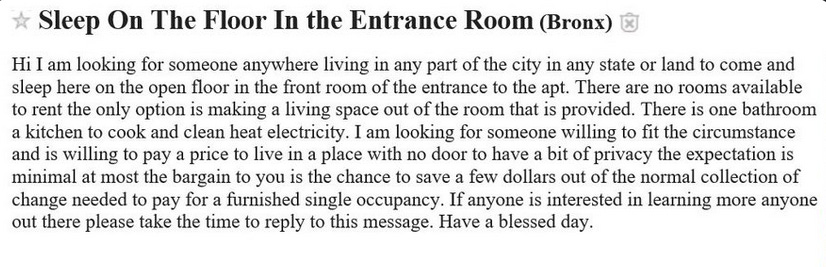
When I first got ill with M.E.2 three years ago, I had already been living with my then-flatmates for a few years, we had become close friends, and when I suddenly was mostly house- and often bedbound, they immediately offered to carry my load of flatshare responsibilities for me. Always having struggled with asking for and accepting help, I felt guilty, but with their reassurance that they didn’t mind and my growing realisation that I couldn’t do anything about it anyway because my body was failing me at every turn, my initial feelings of guilt faded into gratitude.
HELP!
Asking for help, needing help, often without being able to reciprocate, is not a fun position to be in. It makes me feel like a burden, like I’m asking too much, needing to much from the people in my life, and I’m aching to give back more than I’m able to. A guy like Leaf, accusing me of being unfair, is my literal worst nightmare, so if this essay seems emotional, that’s cause it is. I still hate asking for help, but I had to learn to do it anyway. If your body stops working the way it used to, you’re forced to adapt in many ways. I try to spread the load across as many shoulders as possible—my parents, my friends, my boyfriend, the cleaner my insurance covers for 2 hours a month—and yes, my flatmates.

While my situation may be niche (less niche than one might think though), the concept of needing help, and struggling to ask for it, is not. We all need help, and one thing I’ve learnt is that we should be asking for it a lot more. I think of my Mom and how she sometimes gets lonely but doesn’t call her friends to ask for company. Or one of my closest friends and her newborn baby alone at home, who needed a nudge to go knock on her neighbour’s door and ask her to hang out. Or another friend who pulls back whenever his depression hits but really misses us when he does.
I’m lucky that, for the most part, I’m surrounded by people who have reassured me again and again that it really, really is okay to ask. Really? Yes, really. People who see community as a way of life, help care for each other’s children, carry boxes up four flights of stairs on moving day, and sit with each other when they just can’t bring themselves to do that thing that’s been on the to-do list for eleven months on their own. We don’t keep score, we never have.
Actual community survives being ‘‘unfair’’
Leaf and I were virtual strangers when he moved in, he doesn’t owe me anything. He doesn’t owe me his support, or the unpaid labour of cleaning the bathroom 17 times a year as opposed to the 13 times he’d have to if I was part of the cleaning rota equation. So this really isn’t about that, and it’s not even about him. It’s more about my disillusionment with how people view community and fairness.
His idea of community where everyone has to contribute the same amount of labour is exclusionary by design. In his eyes, fair is when everyone gives and gets the same, while I would argue fair is when everyone gives what they can and gets what they need. If we expect everyone to contribute in the same way, aren’t we back at square one, every man for himself? And what happens if you don’t meet your quota—will you be cast aside, survival of the fittest? We build community to lean on each other, as a safety net to fall back on when times are hard. I’m not trying to be dramatic, but if I couldn’t rely on community resources right now—my family, my friends, my health insurance, the social security system (as flawed as it may be)—I don’t know how I would survive. And I don’t think that’s a problem, I actually think it’s the whole point. We want people who, for whatever reason, can’t do it on their own to be able to survive at the expense of those who can handle sharing the load.
I am obviously the one who profits from my flatmates’ solidarity in this scenario, so my argument might sound self-serving, but—and you’re just gonna have to take my word for it here—this has been my conviction since long before I got ill. I’m not some reformed Wall Street banker who got sick and suddenly saw the light (congrats though if you are, better late than never), I’ve been advocating for social justice and solidarity for most of my adult life. And it’s disheartening for me to realise that’s not the case for everybody in my life, especially when the guy in question wears his love of community so openly on his sleeve. Not much left when you take off the tie-dye shirt, I guess.3
Girl, your ableism is showing
I’m not writing this essay to throw myself a pity party or to convince you that I’m in the right, I honestly don’t know if I am, or how to even determine that. I’m writing it to sort through my feelings and to remind myself that me being ill and needing help is not a burden, or a failure, it’s not even that special. Worldwide, about 16 % of the population are significantly disabled.4 In the EU (where I live), 24 % of the population live with considerable limitations due to health issues.5 It’s so fucking common, it’s part of human life, it’s so normal. The problem is that we’ve built a society that is so exclusionary that we mistake caring for each other in a real way for unfairness.
I want to make clear that I don’t think not wanting to do my chores is ableist, I think it’s absolutely your choice whether you want to be part of my support system. It might be disappointing that Leaf doesn’t, and frustrating that he apparently agreed to something he wasn’t okay with6, but that’s it. What I do think is ableist, however, is his concept of community—the unquestioned assumption that everyone is able to contribute the same amount of energy and resources and if they don’t, that makes it unfair. It strikes me as the take of someone who has never had to take care of someone else in their life; an idea of community that never had to stand the test of including disabled people and accounting for the different abilities and resources all of us bring to the table.
Does it matter whether it’s fair?
After my talk with Leaf, I called my go-to guy for processing emotionally complex situations (who also happens to be my boyfriend). He’s much better at setting boundaries than I am and his advice was to not make this my problem. If Leaf doesn’t want this arrangement, that’s his choice. My first impulse is always to turn inward—to feel guilty, or like a burden, or to try and accommodate the other person. The people pleaser in me feels like they have failed and frantically searches for a way to rectify this grave transgression. But, besides a few small things that I can offer—like prioritising sorting through our cookbooks so we can continue to declutter the kitchen shelf—there is a big part of this that I cannot and should not compromise on.
These are boundaries that I have to keep in place to protect my physical health. I don’t agree with Leaf’s definition of fairness, but even if I did and I’d agree that this was unfair, it wouldn’t change a damn thing about what I am capable of contributing at this time. At the end of our call, my boyfriend said, ‘It doesn’t really matter if you asking for help is fair or not. Right now, we need people in our life who want to support you and maybe that’s just not him.‘ So simple, damn.
And maybe he’s right, maybe fairness is not a useful concept here. But if we want to go there and talk about fairness for a moment—why stop at chores? What about any of this is fair? I don’t grapple with the fate of getting ill, I really don’t, I’m not over here screaming why me?? at the heavens. It doesn’t feel unfair or fair to me, it just feels like something that is. But what is unfair is the world’s response to illness and disability. It’s unfair when doctors dismiss and misdiagnose M.E., denying patients the proper care. It’s unfair that research on M.E. has been neglected for decades so there is still no proper treatment. It’s unfair that we have to fight extra hard for disability benefits because dynamic disabilities7 like M.E. don’t fit the state’s simplistic picture of what disability looks like.
And yes, I think it’s unfair that my flatmate is measuring both our contributions to community by the same yardstick when we are running wildly different races.
Luca x
Name changed for anonymity but trust me, the real one was equally hippie-esque.
M.E. is short for Myalgic Encephalomyelitis, (sometimes also referred to as Chronic Fatigue Syndrome (CFS)), a post-infectious long-term illness that impacts many parts of the body and leads to a variety of symptoms, including extreme levels of fatigue, pain and cognitive difficulties. A core symptom is Post-Exertional Malaise, which means that exertion of any kind can lead to an increase in symptoms for days, weeks or months. Many people who suffer from LongCovid also develop M.E..
M.E. is a chronic illness with varying degrees of severity. Not all people who are affected consider themselves disabled, but many do, especially in moderate, severe or very severe cases.
You can read more about M.E. here.
It may sound like I hate hippie culture but I really don’t, I just can’t with people performing a culture of community and love and then not living it. I will forever prefer a radical leftist who looks like a corporate douche over a hippie who looks all flowery kindness but has no substance.
I want to acknowledge that the misery that is the housing market obviously puts people looking for a place to live in a vulnerable position and they might sometimes have to agree to things they’re not comfortable with. In this case it sounded more like he didn’t pay attention or forgot what we had talked about though.
Dynamic disability describes a disability that fluctuates in severity over time, meaning you have good days and bad days, and while your functional capacity might be severely reduced on some days, you can seem pretty fine on others.
Loved this. People say it’s unfair when disabled people don’t “perform”…then you clarify the true unfairness is ASKING THEM TO perform and ASSUMING they can do so to the same level when the title already specifies DIS-abled.
I've had this bookmarked for a while & am very glad to have finally read it.
I adore the reframe near the end; that the ableism isn't in Leaf not wanting to help, it's in assuming everyone starts from the same amount of energy to give. That's essentially an allusion to the definition of equity. & it's a much harder thing to sit with than "be kind," --- which kind of got me thinking on an essay I wrote a while back about true kindness, the one that suspends our own needs/wants in consideration of others.
I love the honesty in this. Definitely subbing. & if you ever want to look at what I'm building over at unsent letters, I'd love that too.